
Operational runbooks
How each pipeline runs, on what schedule, and what to do when it fails: the knowledge an on-call engineer needs at 2am.
 Contact
 The Chronicler writes runbooks and onboarding guides as the platform is built, generated from the build so they are accurate on day one and regenerate when it changes. The project ends with documentation, not tribal knowledge.
Most migrations finish with a working platform and a wiki nobody trusts. The Chronicler writes the documentation as the build happens, from the same knowledge base the migration runs on, so what you read matches what runs.
# Runbook: dim_customer

## Purpose
One row per customer, SCD Type 2.

## Schedule
Daily at 02:00, incremental on modified_at.

## Upstream
stg_customer, src.crm_customer

## On failure
Re-run the model. If the row-count test fails,
check the SCD backfill, then re-run the loop.
Not a glossary nobody opens: the operational, practical documentation a team needs to run a platform it did not build by hand.
How each pipeline runs, on what schedule, and what to do when it fails: the knowledge an on-call engineer needs at 2am.
A path into the platform for a new hire, so the first week is reading, not interrogating the one person who knows.
Written from the build as it happens and regenerated when it changes, so the docs match the platform instead of lagging it.
Versioned alongside the code, delivered with the migration, and owned by you. No portal to rent from us.
In dbt the model docs come for free with the build; runbooks and onboarding guides we generate either way, and in your own framework that is extra effort on our side. dbt or your framework →
Documentation does not stop at the platform edge. Each Power BI dataset is captured as an exposure: what it is for, who owns it, how it is refreshed, and exactly which models it depends on.
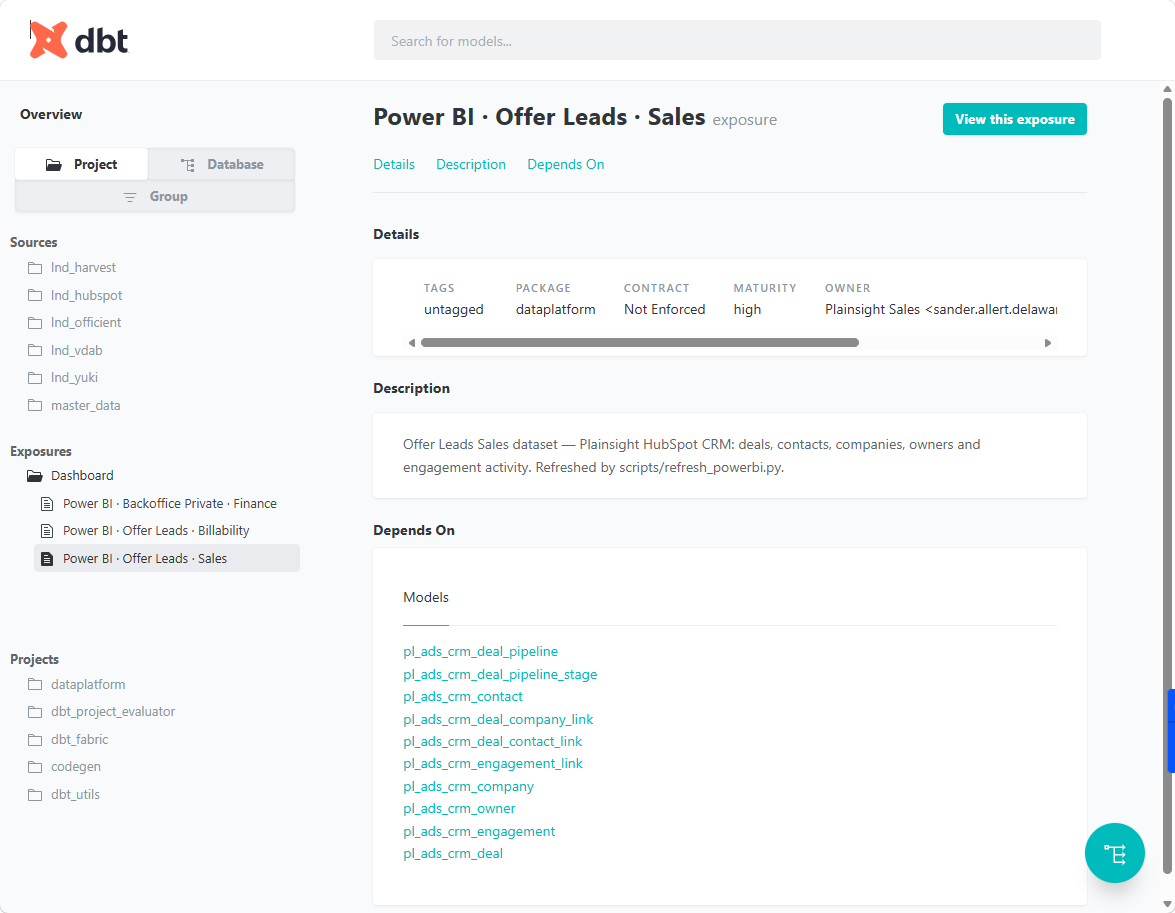
A data dictionary, lineage docs, operational runbooks and onboarding guides for the new platform: enough for a new hire to understand and run it without shadowing someone for weeks.
It is generated from the build, so it regenerates when the build changes. It does not drift away from reality the way a hand-written wiki does the day after it is written. See everything you keep →
Human-readable docs in your repository and your platform’s catalog, browsable and diffable. On the dbt flavor the model docs are the dbt docs site.
Yes. It is delivered with the migration and lives in your systems. Your code and data are used for your migration only, never to train models.
The estate assessment shows the kind of documentation the fleet would generate for your platform, so you can see what a new hire would read before you commit.
Plan my migrationA short form, no spam. We usually reply within one business day.